Research
Publication
The MAGAZ3NE Survey
MAGAZ3NE Survey: ALMA observations on Massive Quiescent Galaxies at z > 3
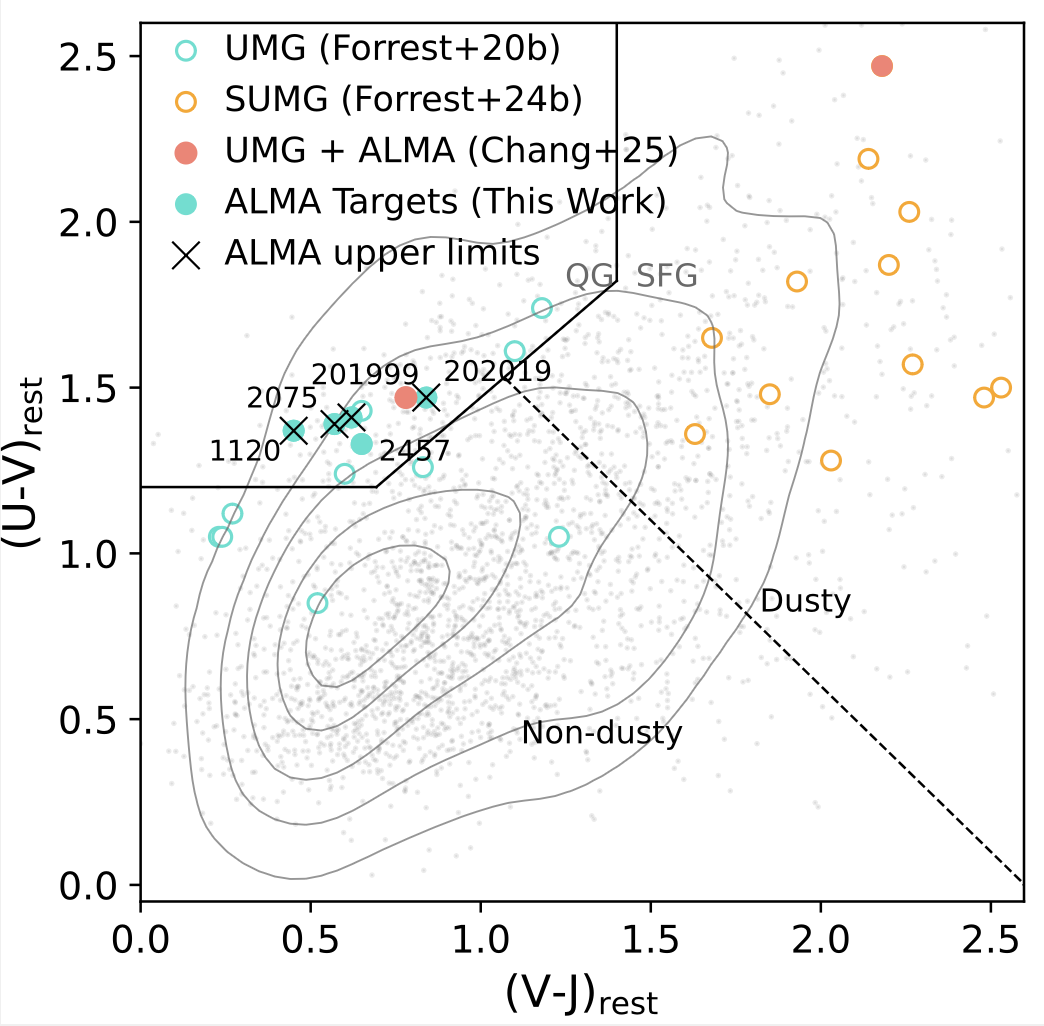
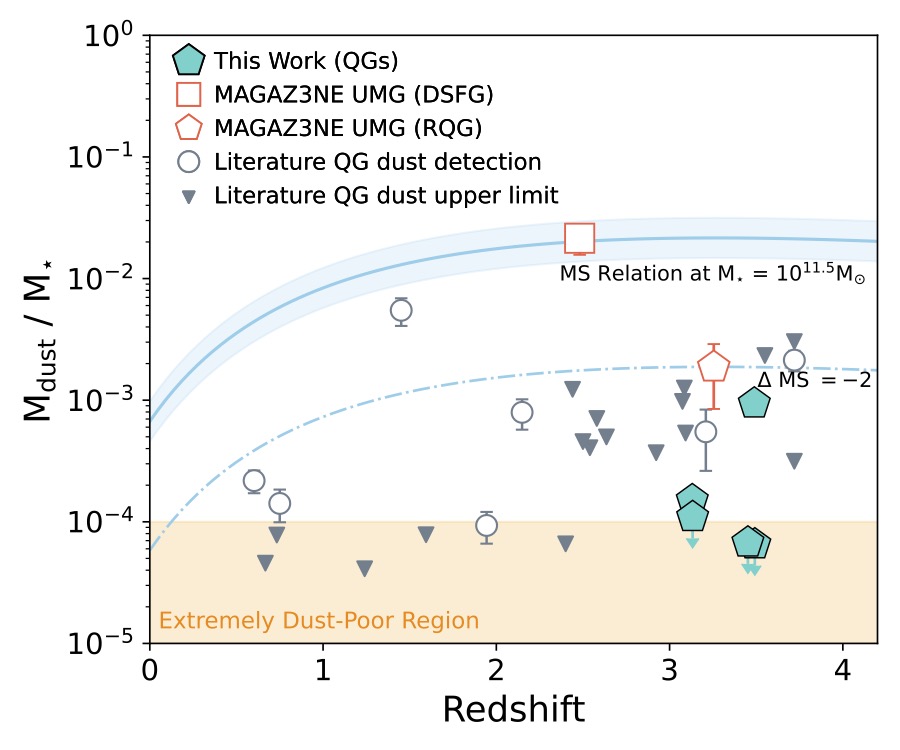
As part of the MAGAZ3NE survey, we observed five UMGs with ALMA dust continuum to assess whether these systems are truly quiescent (Cyan filled circles in the figure). The millimeter continuum measurements constrain their dust reservoirs and provide insight into the state of the cold interstellar medium during rapid quenching. Our results present the most massive and extremely dust-poor spectroscopically confirmed quiescent galaxies at 3 < z < 4, providing valuable observational constraints on rapid dust removal and quenching processes in the early universe.
Chang, W., Wilson, G., Forrest, B., et al. 2026, arXiv e-prints, arXiv:2601.22844
MAGAZ3NE Survey: FIR-Radio Insights into Ultra-Massive Galaxies at z > 3
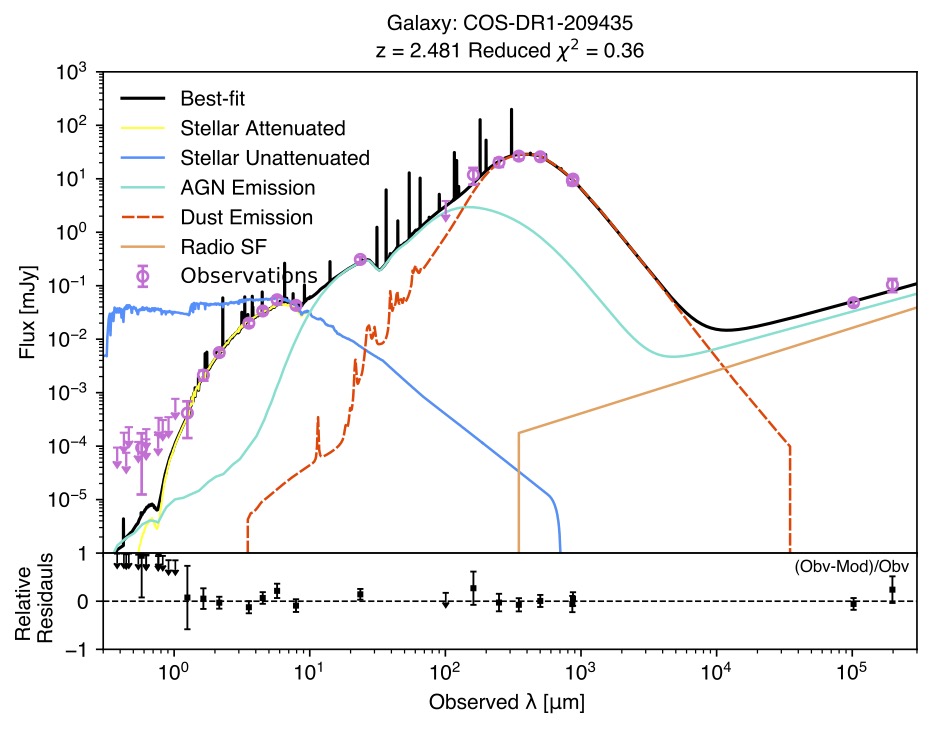
I present comprehensive UV-to-radio spectral energy distribution (SED, left figure) analysis of MAGAZ3NE UMGs at z > 2.5, combining deep multi-wavelength data from Subaru, UltraVISTA, Spitzer, Herschel, SCUBA, VLA, and ALMA.
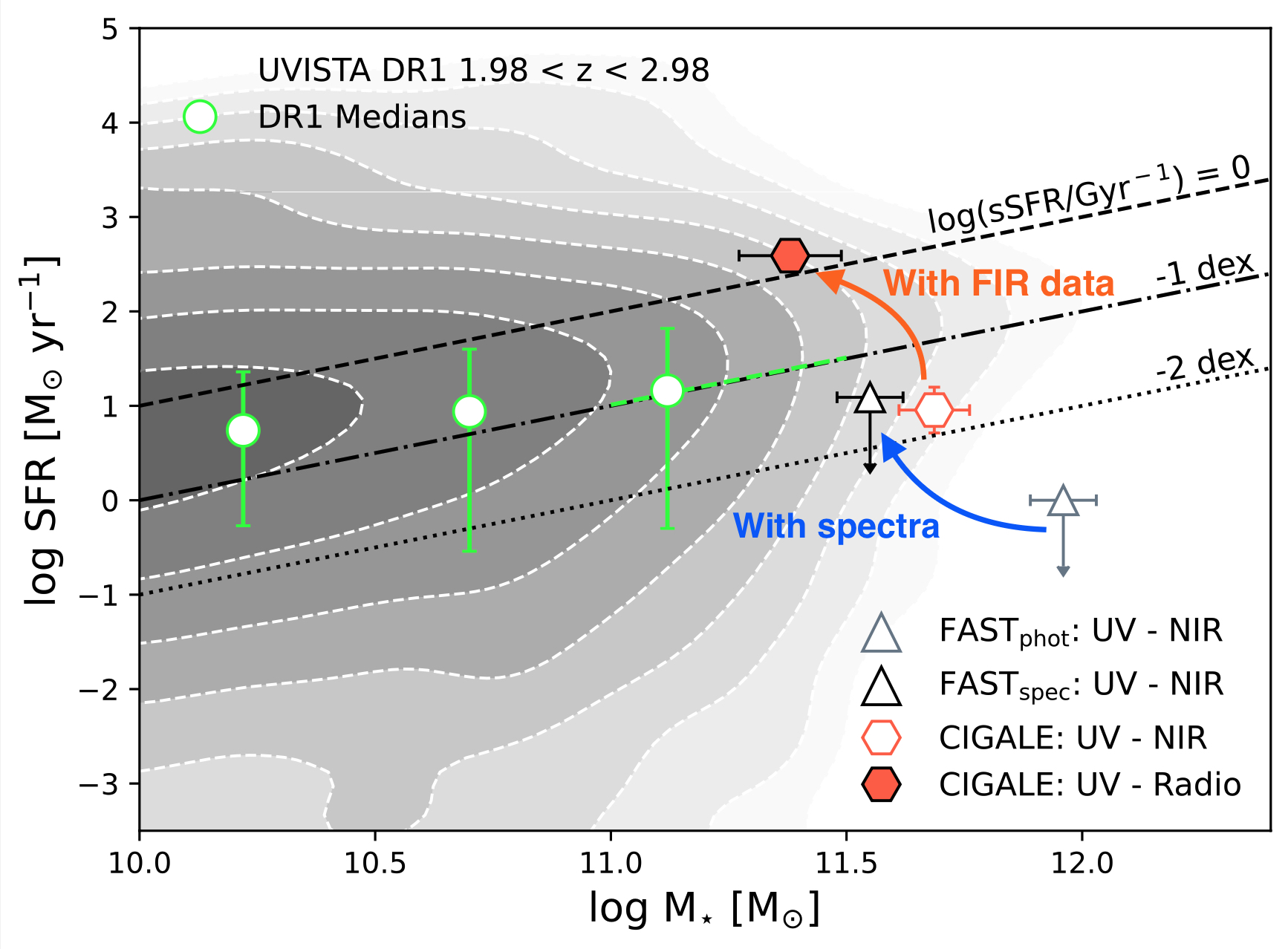
This work examines how inferred stellar properties differ between heavily dust-obscured and less dusty UMGs, and how these results depend on the availability of spectra and FIR data (right figure for the dusty UMG). Molecular gas masses are derived from FIR SED fitting.
Two representative UMGs illustrate this diversity: one is a dusty, star-forming system with a substantial molecular gas reservoir, while the other is a recently quenching galaxy that has already depleted most of its fuel. Both show multiple, independent indicators of AGN activity.
Chang, W., Wilson, G., Forrest, B., et al. 2026, ApJ, 1001, 131
Environmental Effects on Green Valley Galaxies at 0.5 < z < 2.5
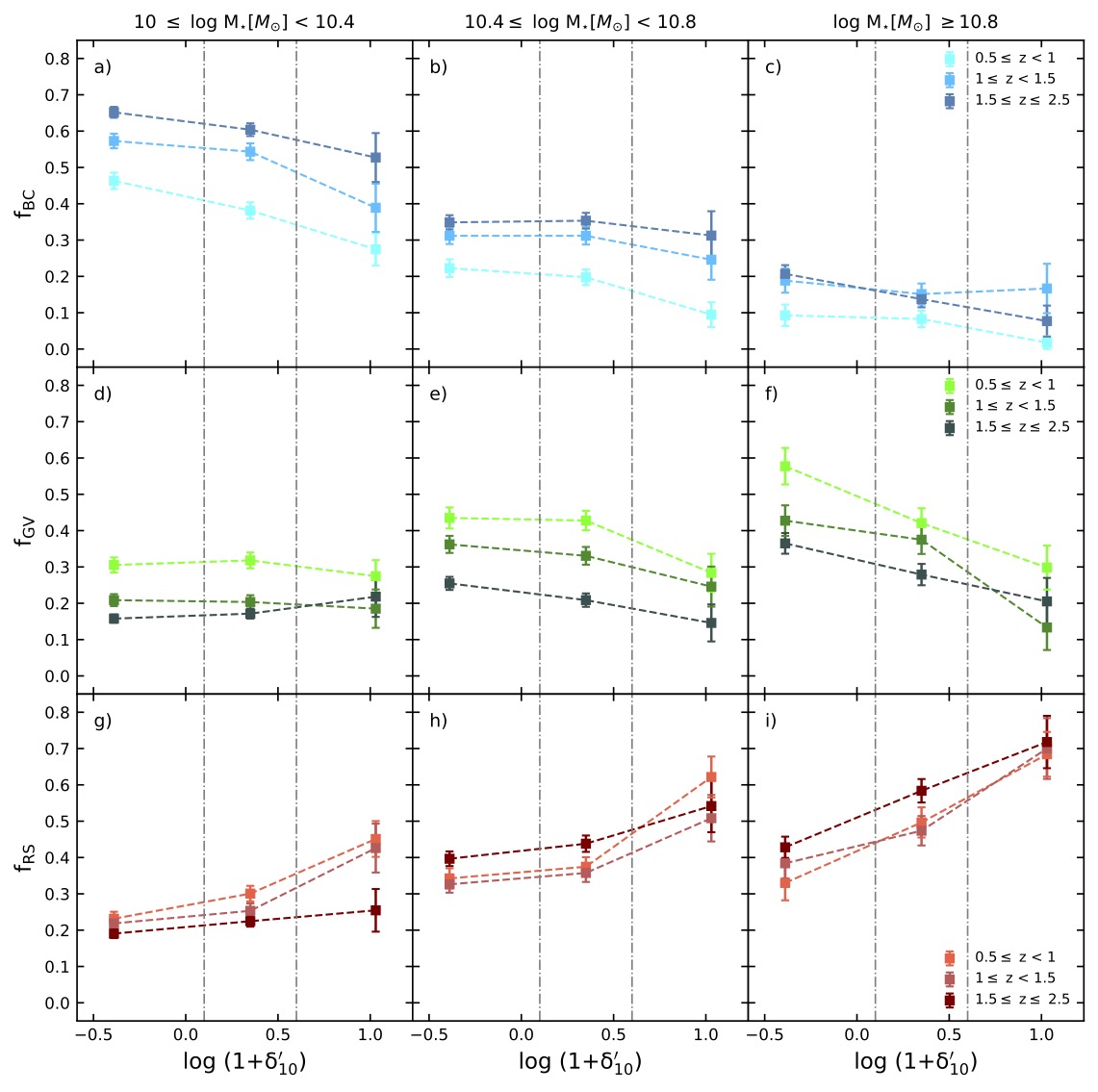
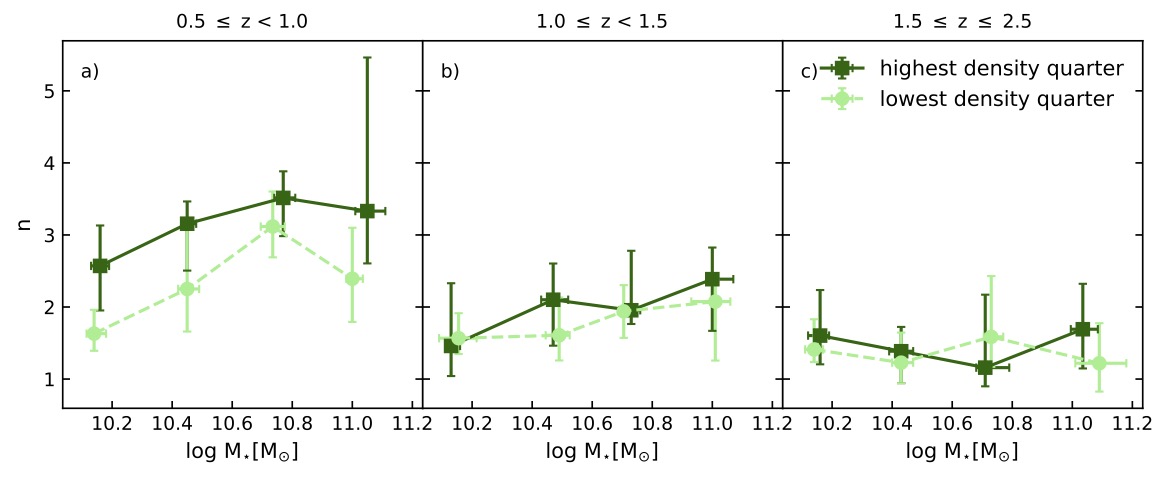
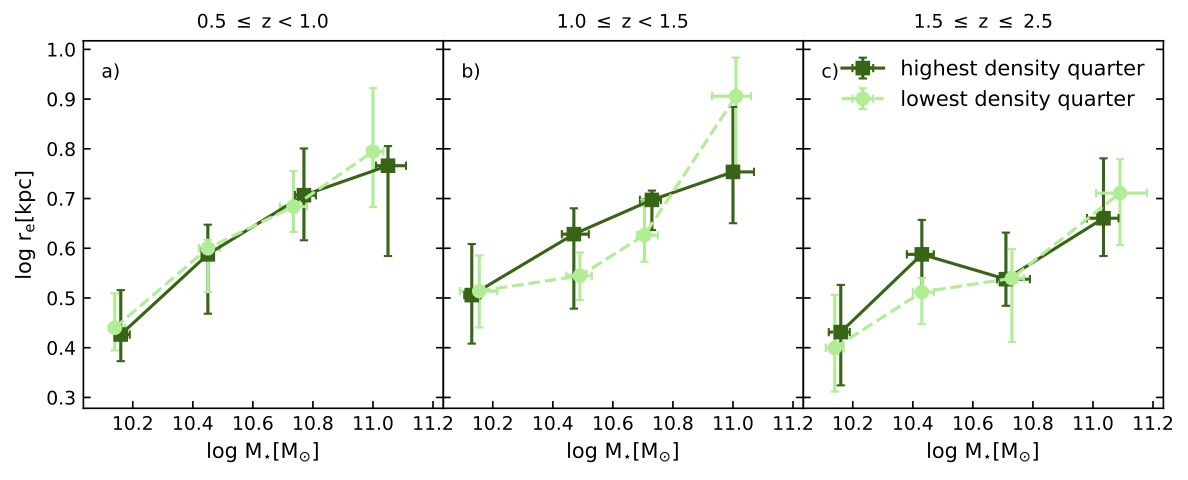
We examine 2126 massive green valley (GV) galaxies at 0.5 < z < 2.5 to assess environmental impacts on quenching. GV galaxies in denser environments show higher Sérsic indices and lower sSFR at 0.5 < z < 1, indicating enhanced bulge growth and suppressed star formation, while no clear environmental difference is seen at 1 < z < 2.5. Galaxy sizes remain similar across environments. For the most massive GV galaxies, a sharp drop appears in the denser environment. These trends suggest that stellar mass and environment act together to drive quenching.
Chang, W., Fang, G., Gu, Y., et al. 2022, ApJ, 936, 47, doi: 10.3847/1538-4357/ac8748